History
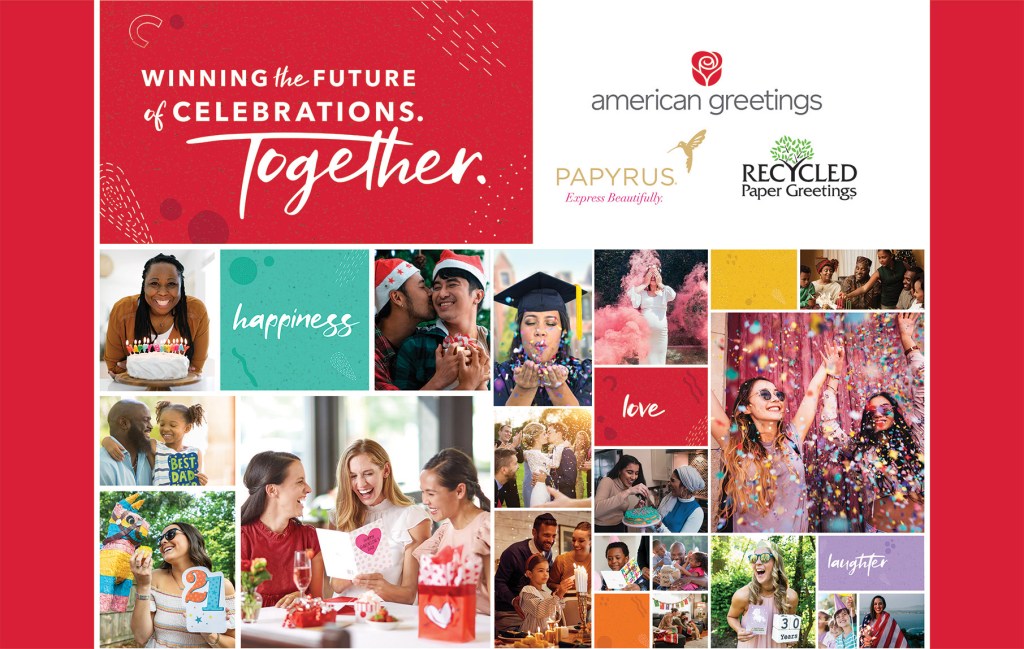
American Greetings Corporation is one of the world's largest manufacturers
and distributors of social expression products. Along with greeting
cards, its product lines include gift wrap, party goods, candles,
stationery, calendars, educational products, ornaments and electronic
greetings. American Greetings is also the creator and owner of many
celebrated character properties, including Strawberry Shortcake,
Holly Hobbie, and Care Bears. Located in Cleveland, Ohio, American
Greetings generates annual net sales of approximately $2 billion.
While today, the company helps millions of people worldwide stay
connected and celebrate life's special occasions, it all started
with $50 and the dreams of one determined young man.
1900s
Big dreams, humble beginnings
- The success of American Greetings Corporation began in the heart
of Jacob Sapirstein, a young Polish immigrant. Jacob believed
that with ambition, ethics and hard work, anyone could achieve
the American dream.
Shortly after his arrival in America in 1905, Jacob moved to
Cleveland, Ohio, and became a jobber of post cards - a popular
item of the times - buying the cards from German manufacturers
and selling them to local merchants.
To start his business, Jacob borrowed $50 from a local bank to
buy a supply of penny postcards, which he sold to drug stores,
novelty shops and confectioners. By the end of the first week,
he had sold enough cards to repay the loan, and had an extra $50
to fund the following week's business. The most popular designs
in his early product line expressed feelings using rhymed verses
and flowery Victorian artwork.
Jacob and his wife had four children: sons, Irving, Morris, and
Harry; and daughter Bernice. Before long, the Sapirstein Greeting
Card Company became a family operation. The children helped their
father organize inventory, stuff fancy postcards into envelopes
and make deliveries to accounts in the family's horse-drawn cart.
1910s
1918 - The flu won't stop business
- In a family business, everyone helps out. In 1918, when Jacob
was bedridden by the flu epidemic that killed 20 million people
worldwide, son Irving, 9, made sure Christmas and Valentine's
Day cards were delivered to retailers. By age 12, Irving was keeping
the company books. His brother, Morris, joined soon after, delivering
cards to stores after school.
1920s
1921 - A peek at the books
- In 1921, family business sales totaled $11,500, enough for Jacob
to take home $1,000 for the year. That's equivalent to about $100,000
sales today, or take home pay of $9,000. By 1928, sons Irving
and Morris were increasing sales even further. One of their biggest
deals closed when a landmark Cleveland amusement park, Euclid
Beach, bought $24,000 worth of picture postcards equivalent to
about $240,000 in sales today.
1929 - Shopping is made easy
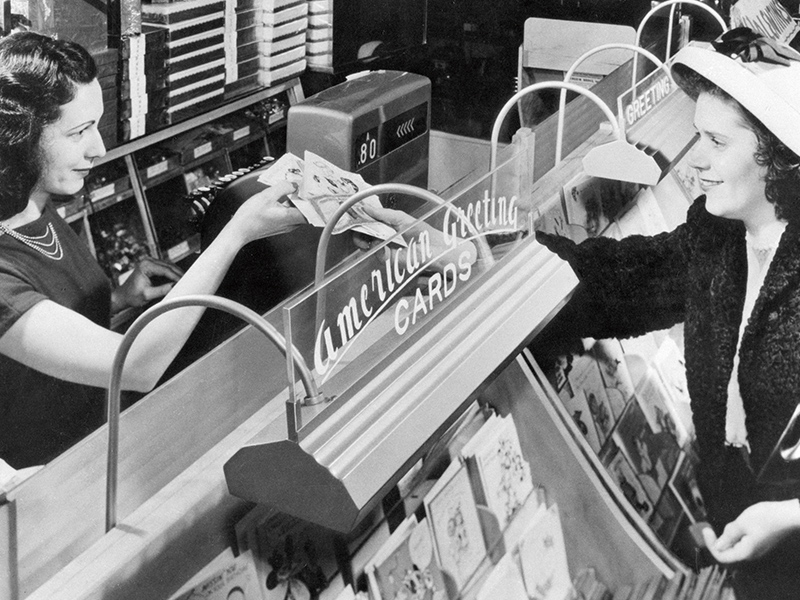
- Shopping for greeting cards hasn't always been easy. At one
time, shoppers had to flip through an album and then ask a shopkeeper
to pull the card from behind the counter. American Greetings simplified
everything in 1929 by introducing the first self-serve greeting
card display fixtures. This innovation has withstood the test
of time, and is still the standard display vehicle for greeting
cards today.
1930s
Greeting cards cure depression
- Through the Great Depression, Jacob's business flourished. People
bought milk and bread to feed their bodies and greeting cards
to feed their spirits. During the Depression, inexpensive greeting
cards were often given in lieu of gifts people couldn't afford.
By 1936, the Sapirstein Greeting Card Company was printing its
own cards. Since World War II soon made it impractical for Jacob's
young company to import cards from Europe, establishing its own
manufacturing plant became a smart strategy. Making its own cards
gave the fledgling company the ability to develop its own paper,
art, verse and envelopes to have complete creative control over
the cards that "say it best."
1940s
World War II changes everything
- Before World War II, Americans were usually married and buried
in the same towns in which they were born. They didn't travel
much and had little need to communicate in writing. The war changed
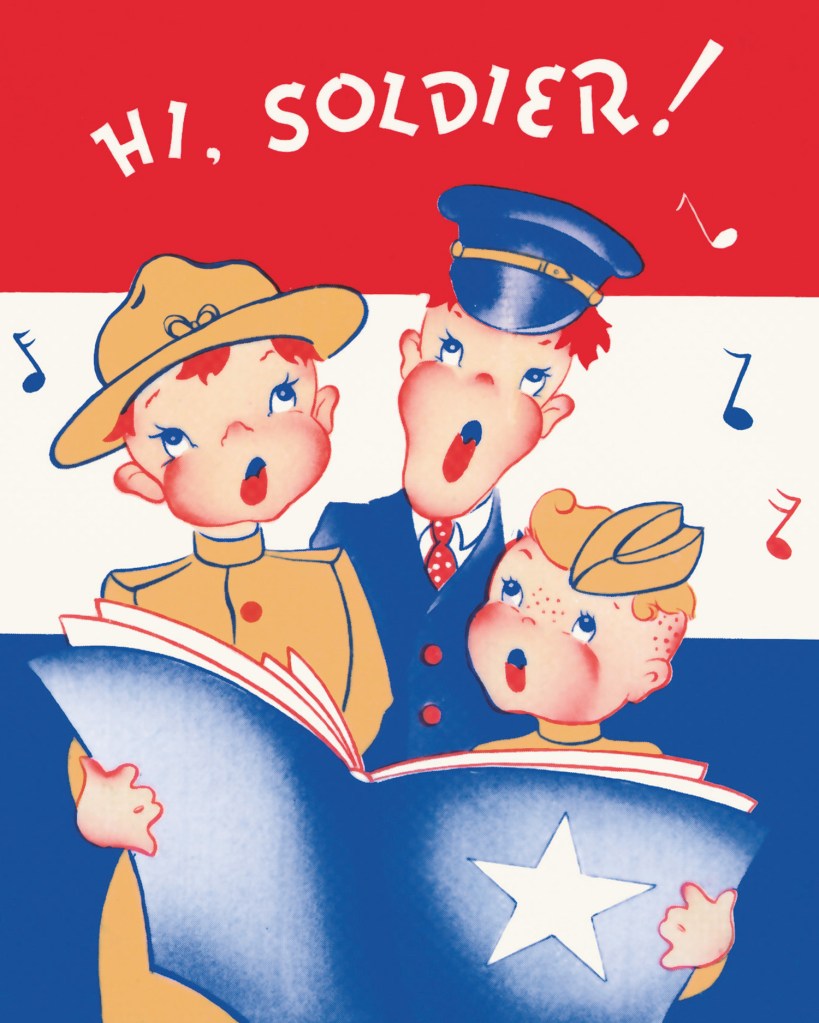
that. People were often separated from their families, and used
greeting cards to stay in touch. Now known as American Greetings
Publishers, Jacob's company had six artists creating red-white-and-blue
cards with patriotic rhymes to help families connect the home
front with the front line.
Also during the 1940s, Jacob's sons Irving, Morris and Harry,
changed the family name from "Sapirstein," which translates as
``sapphire stone," to "Stone."
1950s
1952 - Everyone can take stock in American Greetings
- After World War II, Americans grew restless with wanderlust.
Improved automobiles gave them a new mobility and began to separate
families. These new adventurers used greeting cards to communicate
with those back home. Jacob's company enjoyed phenomenal growth,
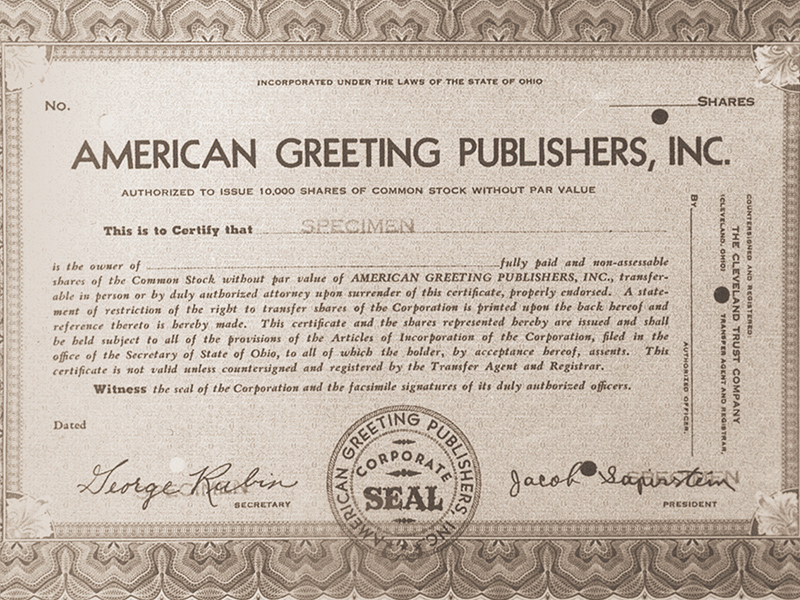
leading to its first public offering of stock in 1952, with the
sale of 200,000 shares at $12 a piece. Today, the company trades
on the New York Stock Exchange under the ticker symbol AM.
1956 - Carlton Cards comes on board
- With the acquisition of Carlton Cards, a Canadian-based card
company, American Greetings created a continental sales perspective
for itself. With the addition of Carlton, American Greetings also
realized a significant increase in revenues.
1957 - Meet Hi Brows
- Beatniks launched the anti-establishment movement in the 1950s
and Americans began to question tradition. Building on this counterculture
momentum, American Greetings introduced a new kind of greeting
card - Hi Brows. These irreverent, witty cards were slim and tall.
Even the name of the cards was a rebellious parody. The inspiration
for Hi Brows came from funny cards being made by Bohemian artists
in their Greenwich Village studios. Hi Brows featured short, comic
punch lines and cartoon-style artwork, a new generation of greeting
cards to help a new generation communicate.
1960s
1967 - Holly Hobbie character debuts
- After the Vietnam War protests, civil rights riots and cultural
revolution of the 1960s, Americans looked to nature and history
for an antidote to the cultural and economic tumult of the times.
American Greetings filled the void with Holly Hobbie, a nostalgic
sweetheart who was symbolic of simpler times. Holly captured the
fancy of millions with her peaceful, patchwork Americana style.
Named after the artist who created her, Holly Hobbie was introduced
on greeting cards in 1967. With her introduction, American Greetings
led the world into the phenomenon of character licensing. By 1977,
Holly Hobbie was one of the most sought after female licensed
character in the world.
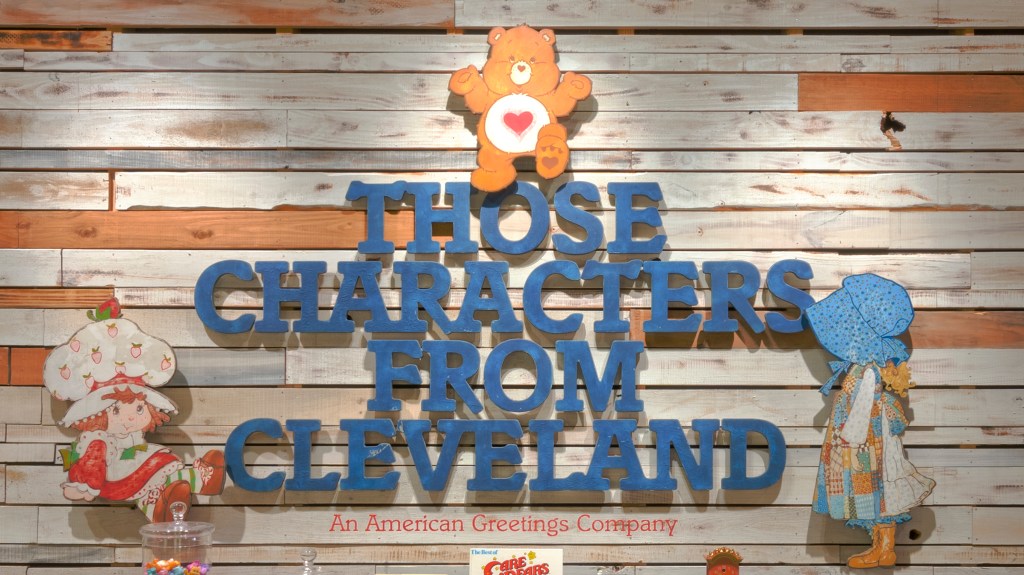
The Holly Hobbie character was the first licensed property launched
by Those Characters from Cleveland, Inc. (TCFC, Inc.) an American
Greetings subsidiary that would go on to add such stars as Strawberry
Shortcake, Care Bears and the Get Along Gang to its list of accomplishments.
Today, the company's Outbound Licensing program (the descendent
of TCFC.) and its property development accounts for nearly $1
billion in worldwide retail sales annually.
1968 - Carlton extends into Mexico
- American Greetings purchased Feliciataciones Nacionales in 1968,
and made it a part of the Carlton family. The new subsidiary was
renamed Carlton Mexico S.A. de C.V. under its new ownership.
1970s
Imagine a better world
- Following the tumultuous '60s, many of America's youth distrusted
"anyone over age 30." They bonded with each other and talked idealistically
about building a world based on love, sharing and caring. The
new Soft Touch card line took the dreamy idealism found in John
Lennon's rock-n-roll reflection "Imagine," and translated those
feelings into a new genre of sensitive greeting cards. Soft-focus
images were combined with tender words. Sales skyrocketed.
1978 - American Greetings gets into the fixture business
- Expanding its ever-growing evolution as an innovative corporation,
American Greetings established AG Industries, Inc. as the largest
display fixture company in the nation.
1978 - Christmas all year round
- Plus Mark Canada, a manufacturer of Christmas wrap, boxed cards
and accessories, was purchased by American Greetings in 1979.
The small, seasonally inspired enterprise became a major asset
of American Greetings. Today, Plus Mark, an American Greetings
subsidiary, has evolved into a leading manufacturer and distributor
of promotional Christmas giftwrap, boxed cards and accessories.
Plus Mark operates in the mass retail marketplace to develop private
label products for retailers. Innovative designs, new products
and accurate shipping keep retail registers ringing during the
holiday season.
1980s
Strawberry Shortcake - The $500 million girl
- Strawberry Shortcake, a new character personifying spunky innocence,
made her debut in 1980. By 1981, the adorable rag doll-style character
dressed in her pinafore and bonnet generated $500 million in retail
sales. In less than a year, more than 600 different Strawberry
Shortcake products became available. The adorable little girl
from Strawberryland was featured on everything from toys and accessories
to housewares and apparel. Strawberry Shortcake was also a national
celebrity, appearing in a national telethon, on two television
specials and in countless magazines, including Ladies Home Journal
and Good Housekeeping.
1980 - American Greetings continues global expansion
- In 1980, American Greetings purchased the rights to Rust Craft
Greeting Cards of Toronto, Canada, and all of its subsidiaries.
American Greetings also acquired from the Phillip Morris Group
their UK greeting card subsidiary Celebration Arts Group Ltd (CAG)
based in Corby, Northamptonshire.
1982 - Care Bears cause near riots at retail
- Forget the war protests 15 years earlier -- when Care Bears
debuted, their popularity caused near riots as moms and dads vied
to get their hands on the lovable new characters. The Care Bears
represented different emotions through endearing symbols on their
tummies. The original Care Bears included Tenderheart Bear, Cheer
Bear, Friend Bear, Bedtime Bear, Birthday Bear, Wish Bear, Good
Luck Bear, Grumpy Bear, Love-a-lot Bear and Funshine Bear. Consumers
filled theaters across the country to see three full-length, animated
Care Bear movies. In its first five years, Care Bear merchandise
accounted for $2 billion in retail sales.
1985 - Further acquisitions strengthen company
- American Greetings acquired Dallas-based Drawing Board Greetings,
Inc. The acquired company would later become Carlton Cards, Inc.,
USA.
1986 - Company reaches $1 billion milestone
- At the age of 101, Jacob Sapirstein saw his company sell more
than $1 billion in social expression products. That same year,
the company celebrated the Silver Anniversary of using the Rose
Logo as part of its corporate identity.
1990s
An alternative to the everyday card
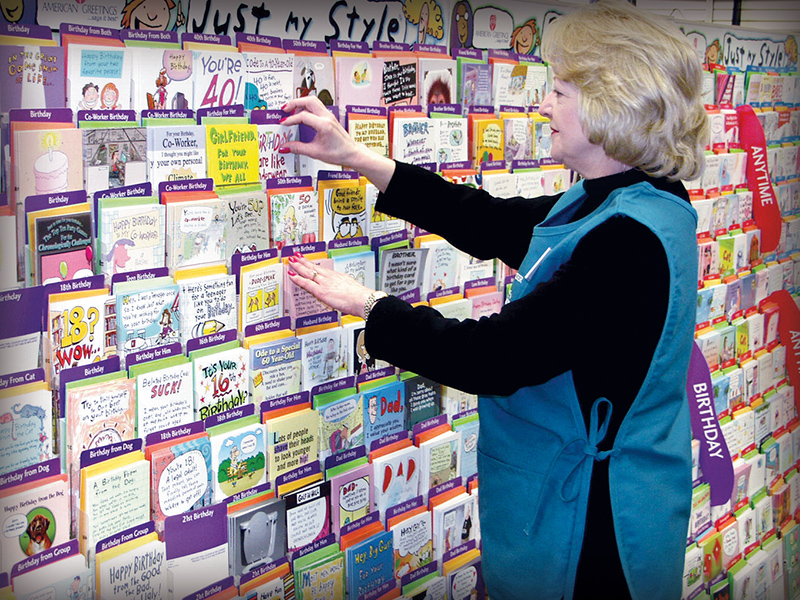
- Alternative cards were introduced in the 1990s. These cards
are the modern-day relatives of the old Hi Brow line and account
for one of every four greeting cards sold today. These casual
creations break a lot of traditional greeting card "rules." They
can be sent for special occasions, or for no reason at all. Today's
alternative cards cover a wide range of humor, from cute to slightly
silly to irreverent and off-the-wall.
1993 - Different name, same quality
- The Summit Corporation, the American Greetings retail store
subsidiary, which became part of the company in 1973, officially
changed its name to Carlton Cards Retail, Inc. Today, Carlton
Cards Retail owns and operates approximately 500 card and gift shops in the
United States and Canada.
1995 - Overseas expansion
- With the acquisitions of John Sands in Australia and New Zealand,
and S.A. Greetings in South Africa, the company strengthened its
international presence considerably by 1995.
1996 - Staking claims in cyberspace
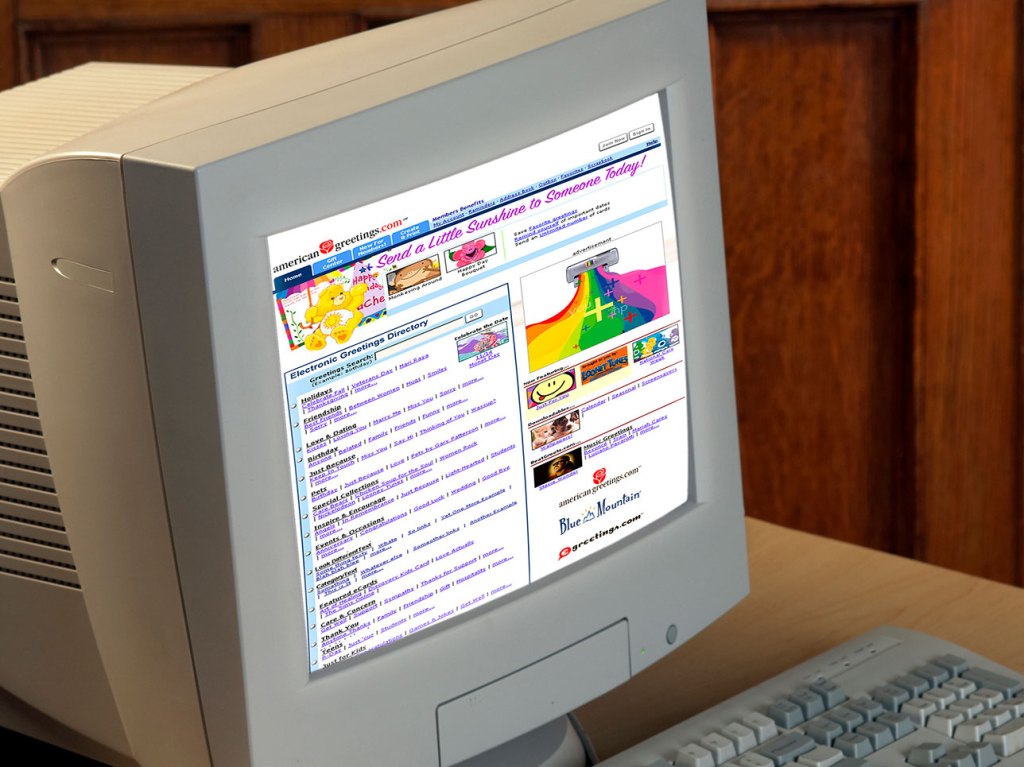
- In 1996, American Greetings launched its own site on the World
Wide Web, featuring paper greeting cards, electronic cards, candy,
flowers and gifts. Today, AG Interactive offers one of the largest
creative selections available on the Web through its flagship
site, AmericanGreetings.com, as well as its family of other sites,
including Egreetings.com and BlueMountain.com. Together, these
sites offer more than 30,000 high quality greetings and comprise
the number one online greeting card destination in the world.
The sites have more than two million paying subscribers and tens
of millions of unique visitors per month.
1997 - Offering what you need for every special occasion
- American Greetings had offered party goods and candles as part
of its core product lines for years, but in 1997, it developed
separate core business units to focus resources exclusively on
these products. DesignWare became a full-line party goods supplier
and GuildHouse, became the company's candle business unit.
1997 - Learning some new skills
- Also in 1997, the company announced the debut of a revolutionary
new line of educational products called Learning Horizons. The
new line, aimed at meeting the rising demand of educators and
parents is an instant success. Learning Horizons has been honored
for its devotion to creating educational products that are both
beneficial and fun since its inception. Recently, the Learning
Horizons Nick Jr. wipe-off books series was named as one of the
"Hottest Products for 2004" by iParenting Media and the "I Can
Write" stencil kit was named one of "Dr. Toy's Best Vacation Products"
of 2004.
1998 - Something for every day of the year
- American Greetings introduced DateWorks as a separate business
unit, to create, market and distribute the company's calendar
line. DateWorks has become a major factor in the calendar market
and currently features wall, day-at-a-time, pocket and mini calendars
in addition to many personal planners.
2000s
2000 - Gibson joins the American Greetings family
- American Greetings ushered in the new millennium by acquiring
Gibson Greetings combining the world's two largest publicly held
greeting card companies. The addition of Gibson also gave American
Greetings a stronger presence in the deep discount channels.
2002 - Care Bears emerge from hibernation
- Twenty years after their original introduction by American Greetings
in 1982, the Care Bears re-emerged from the clouds of Care-a-lot
to charm a whole new generation of kids and parents. The relaunch
proved that the characters are in demand with three different
generations: parents, who fondly remember the Care Bears they
grew up with; children, who discovered them for the first time;
and teens, who embraced the icons from the '80s for their hip,
"retro chic" appeal.
2003 - Strawberry Shortcake is back in action
- Today's mothers experienced a little déjà vu when another great
'80s icon, Strawberry Shortcake, was reintroduced at the 2003
Rose Bowl Parade. Today, the beloved icon has two different looks.
"Classic Strawberry Shortcake" with her trademark pinafore
and rag doll look, captures the interest of collectors and young
women who fondly remembered Strawberry Shortcake from their youth.
An updated, more contemporary version called "Strawberry Shortcake
and Friends" was also introduced, to appeal to today's little
girls. She retains her spunkiness and charm, but resembles a real
little girl instead of a rag doll. Overalls replace the pinafore
and the bonnet becomes a wide-brimmed straw hat.
2004 - American Greetings gets interactive
- With a jump into mobile technology in 2004, AG Interactive continued
the trend of bringing social expression to growing markets of
tech-savvy consumers. In the spring of 2004, AmericanGreetings.com
announced the formation of AG Mobile, the company's new wireless
division. As a result of this expansion into a new medium, the
company also changed its named from American Greetings.com to
AG Interactive, a move made to highlight the company's growing
presence beyond online greetings. The company bolstered its new
stance when it acquired MIDIRingTones, an award-winning mobile
entertainment and personalization company. The St. Paul, Minnesota-based
MIDIRingTones creates, sells and distributes wireless content,
including ring tones, graphics, audio tones and games to the latest
generation of cellular phones.
2004 - Celebrating all aspects of life
- DesignWare evolves into Celebrate It!, to better reflect a diverse
range of products and expanded business mission, which now focuses
not only on party goods, but many different categories of products
that help consumers connect, express and celebrate themselves.
The Celebrate It! group combines DesignWare, Learning Horizons
and BalloonZone.
|